The Parish Pulse is our monthly roundup of higher education trends, enrollment insights, and the industry conversations we’re watching.
Higher education continues to evolve rapidly, but many of the conversations we’re having this summer point back to the same themes: adaptation, differentiation, and institutional strategy.
Lately, we’ve found ourselves less interested in what’s changing and more interested in what those changes reveal.
- AI is prompting new conversations about the value of liberal arts education.
- Enrollment data is forcing institutions to think differently about growth.
- Even Slate implementation often comes down to reexamining long-standing processes rather than simply recreating them.
We’re noticing colleges and universities reevaluate long-standing assumptions and ask new questions about how they operate and serve students.
Here are a few change-based resources and observations that stood out to us this month.
AI May Strengthen the Case for Liberal Arts Education
Much of the AI conversation has focused on what the technology might replace.
A more interesting question may be what makes it more valuable.
As AI automates more routine and technical tasks, skills like critical thinking, communication, adaptability, and synthesis may become even more important. These are the very skills that liberal arts and humanities programs have long been designed to develop.
In The AI Revolution Is a Big Opportunity for Liberal Arts Degrees, we explore why AI may strengthen—not weaken—the case for liberal arts education and how institutions can better articulate that value to prospective students and families.
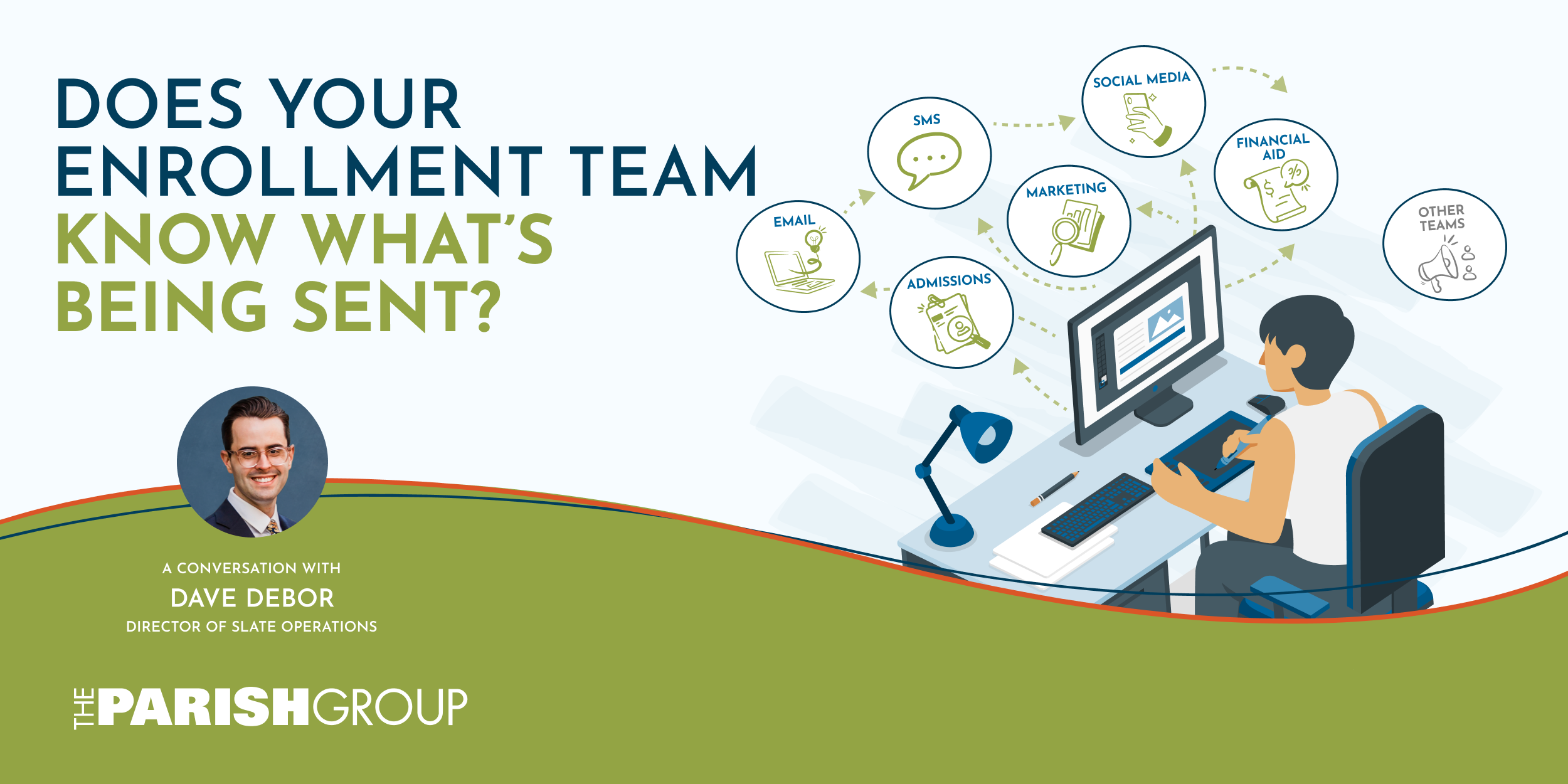
Good Slate Implementations Start with Better Questions
Ahead of the 2026 Slate Summit, we asked members of our Slate team for the one piece of advice they’d give new users.
Chief Slate Strategist Marcus Webb‘s recommendation was simple: don’t use Slate to recreate old processes. Use it as an opportunity to rethink them.
“Avoid system architecture directly in Slate with the mindset of ‘Let’s rebuild this in Slate the way it worked in whatever previous system.’ Instead, enter with the mindset of ‘What is the ideal version of this process?’ and craft Slate’s functionality to make that ideal a reality.”
The most successful Slate projects are rarely about technology alone. There are opportunities to improve workflows, reduce friction, and create better experiences for staff and students alike.
You could check out what the rest of The Parish Group’s Slate team said here.
Enrollment Trends Worth Watching
Recent reporting and research continue to highlight several trends shaping higher education.
According to Inside Higher Ed’s spring enrollment analysis, health professions and engineering remain among the fastest-growing academic fields. For liberal arts institutions, this may create an opportunity to better demonstrate how humanities skills complement and support careers in high-demand industries.
Meanwhile, in Eight Predictions for the Future of Higher Education, Jay Caspian Kang says that the percentage of high school graduates attending college will continue to decline in the years ahead.
That trend makes Dr. Leah Beth Hubbard‘s recent argument particularly timely. In The Enrollment Metric Higher Ed Gets Wrong, she suggests that institutions may benefit more from focusing on best-fit applicants than from simply increasing application volume—as demographic shifts continue to reshape enrollment landscapes, many institutions may find that strategic alignment matters more than sheer scale.
One More Read
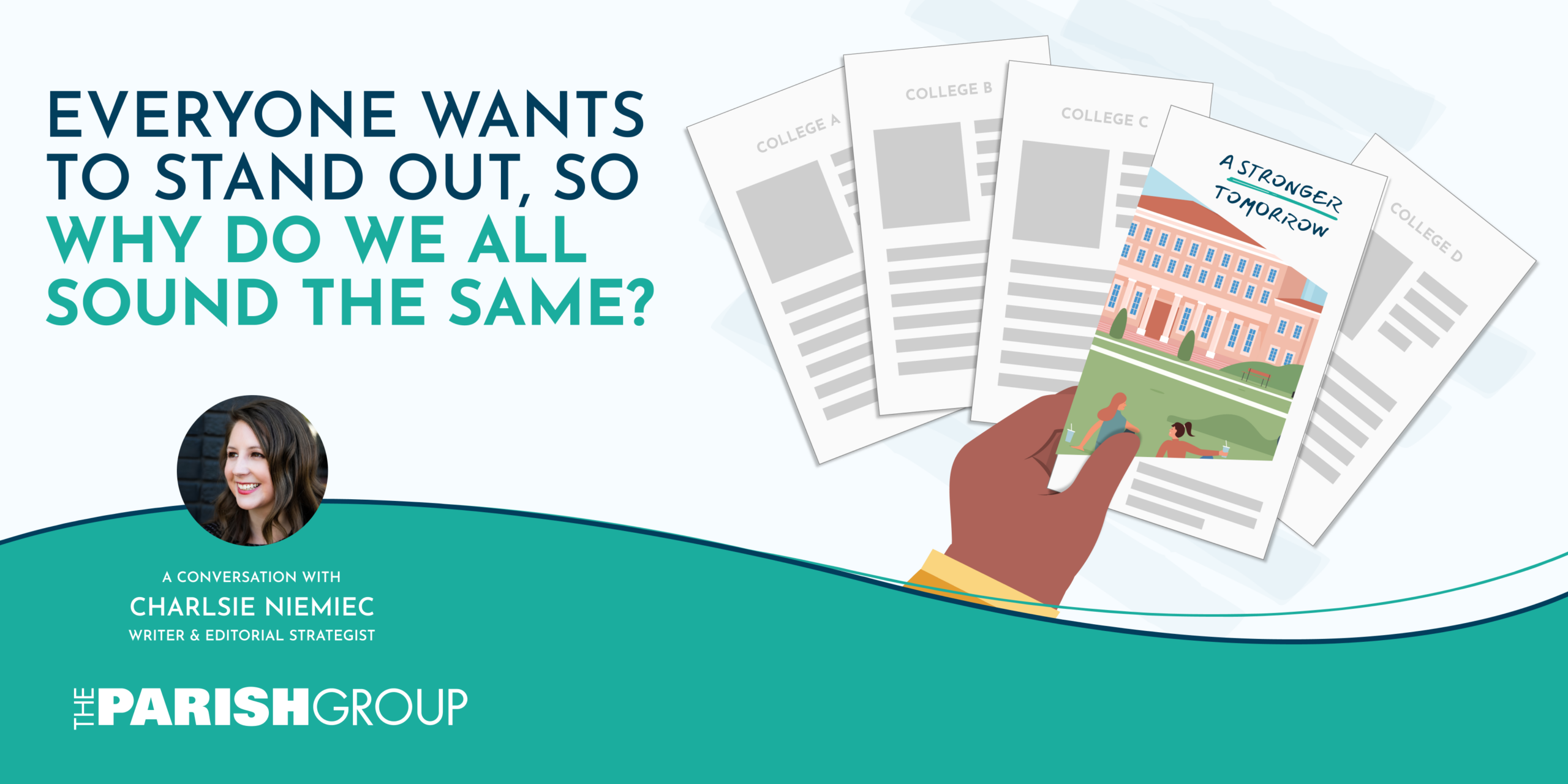
If you’re involved in higher education marketing, we also recommend Volt’s recent piece on breaking through the Higher Ed Sea of Sameness.
As competition for student attention increases, differentiation remains one of the most important—and most difficult—challenges facing colleges and universities today.
Final Thoughts
While the topics above may seem unrelated, they all point toward a common reality: institutions that succeed will be those willing to challenge assumptions, refine their processes, and clearly communicate their value.
The tools may change. The technologies may evolve. But being forward-thinking and adaptable remains as important as ever.
You can also receive Parish Pulse each month as a newsletter. Subscribe here to stay updated on the trends and ideas we’re following.