A Conversation with Dave DeBor, The Parish Group’s Director of Slate Operations
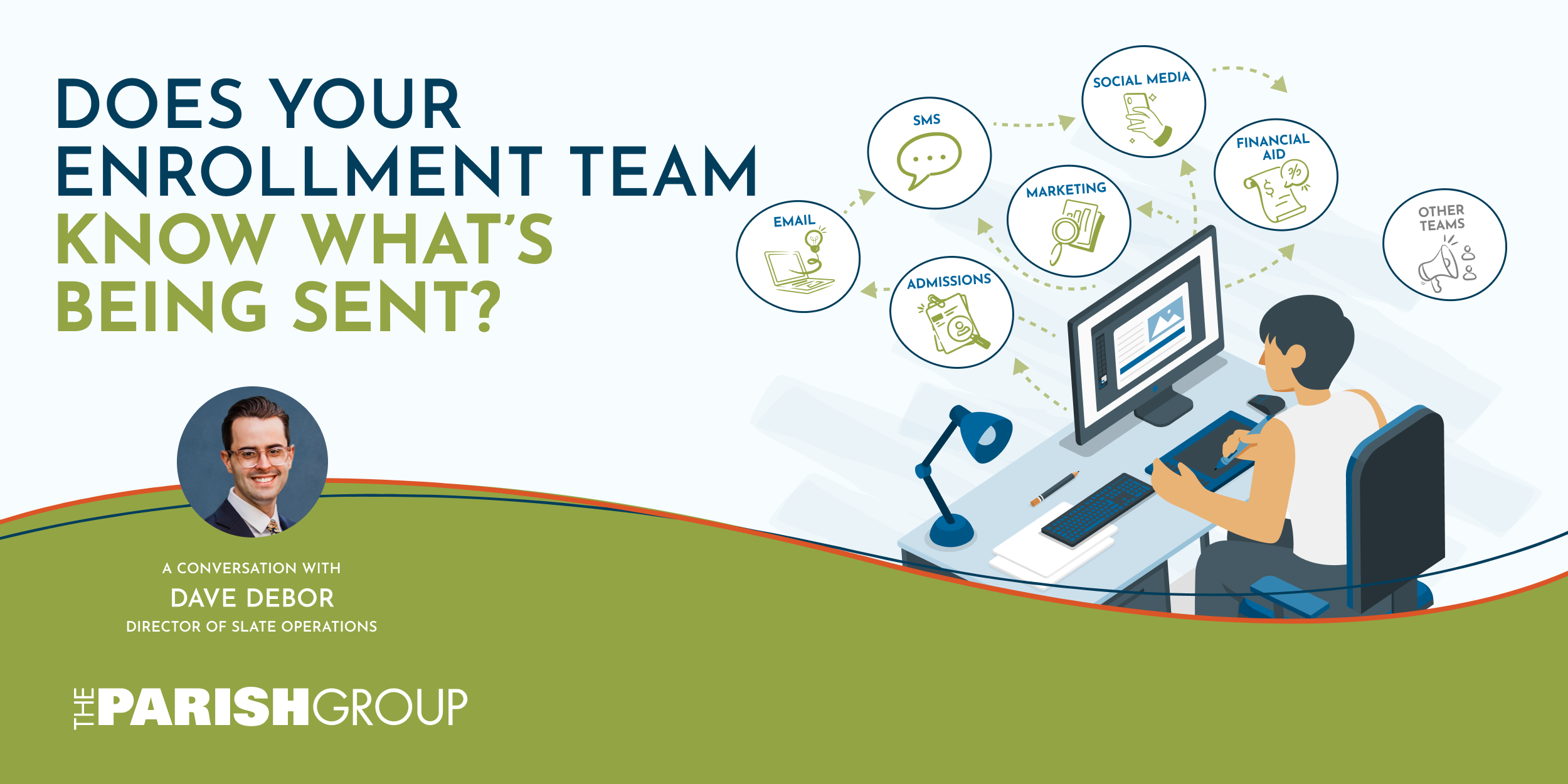
Enrollment communications rarely come from a single person or place. Admissions counselors, marketing teams, financial aid offices, and other campus partners may all have a hand in what students receive. Keeping track of those messages—and how they fit together—can become difficult as more people, audiences, and priorities enter the picture.
Students have expectations for those communications, too—in a 2026 survey, 43% of prospective students said they wanted emails from colleges only when there was something important to share. Meeting those expectations takes more than sending the right message. It also requires a clear picture of what students receive, when they receive it, and how those communications work together.
The Parish Group’s Director of Slate Operations, Dave DeBor, works with Slate, a CRM platform built specifically for higher education institutions. As a Slate Platinum Partner, TPG helps colleges and universities make the most of the platform.
Dave has spent years working at the intersection of enrollment and technology. We spoke with him about the challenges of managing enrollment communications, what teams can learn from their own processes, and how institutions can get a clearer picture of what’s being sent.
Keeping Tabs On Your Higher Ed Institutions Communications With The Parish Group’s Dave DeBor
TPG: You’ve worked in admissions and enrollment operations at several institutions. Why has managing enrollment communications become such a complicated task?
DD: Sending communications is vital to driving enrollment outcomes, so it usually requires input from many stakeholders who often work in different departments with slightly different interpretations of what needs to be sent and to whom.
Add in the pressures of today’s highly competitive enrollment landscape and the need for expediency, and it can conflict with the need to be intentional and accurate in ensuring the right communications reach the right audience.
TPG: As more teams contribute to student communications, what can happen when people don’t have a clear picture of what else is being sent?
DD: In short, duplicative content can get sent out, confusing prospective students and increasing questions for an already busy enrollment team.
Panic can also set in if time-sensitive communications are overlooked, causing potential errors in messaging or targeting. Nobody wants to be the school that sends “Congratulations!” to students who weren’t admitted, so easing a rushed process becomes paramount.
TPG: How can institutions tell when their communications have become difficult to manage, even if individual campaigns seem to be working just fine?
DD: To me, the signs are when students reply to emails meant to reduce confusion with more questions. Listening to front-line admissions counselors will clue you in to signals that your communications are creating more confusion in your enrollment process.
Another sign to watch for is communications that take far longer than necessary to get off the ground—this often happens when teams don’t know the official brand standards, necessitating detailed design conversations for every individual communication.
Making your design options and brand as clear and universally understood as possible can reduce staff asking for layout or design changes that bog down the approval process.
TPG: At a few partner institutions, you developed a Communications Portal to visualize upcoming emails and streamline the email/SMS request process. What prompted you to build it, and what did you learn from that experience?
DD: In a nutshell, we needed a way for folks to see what was already planned to go out so they could think through whether their request was truly necessary or if it was already accounted for in a preplanned communication set by the communications team.
A portal was a natural build because it was secure and let us control which communications they needed to see, while still being easy for them to access right on the Slate user dashboard whenever they needed it.
TPG: How can enrollment teams get a better handle on their communications without adding more complexity to their day-to-day work?
DD: A Slate portal can be a powerful tool that puts an institution’s upcoming and sent messages at users’ fingertips while making it easy to request communications aligned with the official brand.
TPG: If an institution wanted to take a closer look at its enrollment communications today, where would you recommend starting?
DD: Definitely start by asking your admissions counselors which emails seem to cause the most follow-up questions. This anecdotal input is extremely valuable and not always something you’ll glean from a standard email performance report.
Also, take a critical look at how long it takes you to go from receiving a new request to sending the communication to the audience. Consider how you can make it easier for those initial requests to include enough information to get the message out. Then, identify your bottlenecks.
Getting a Clearer Picture of Enrollment Communications
Managing enrollment communications takes more than sending individual messages. Teams need ways to understand what’s being sent, coordinate their efforts, and make informed decisions about the communications students receive.
For institutions using Slate, the right tools and processes can help make that work more visible and manageable.
Want to see how? The Parish Group will be hosting a Slate Dive Deeper webinar, “Who’s on First? Keeping Tabs on Communications,” on November 12 at 2 p.m. ET.
Along with Dave, The Parish Group’s Marcus Webb and Malyn Pickett will explore how to build a user-friendly portal that helps enrollment teams track communications at both the big-picture and individual-message levels. They’ll also cover both the technical aspects of the build and the end-user functionality, giving participants the tools to take greater control of managing communications in Slate.
[Register for the Slate Dive Deeper webinar in your Slate home instance.]