Higher education marketing has never been more complex…or more important.
Institutions face rising enrollment pressure, increased competition, and growing expectations from leadership. In response, many colleges and universities seem to be investing more heavily in marketing than ever before. New tools, expanded teams, and sophisticated strategies are now the norm.
And yet, despite all of this investment, a fundamental issue persists: Too often, the message misses the mark.
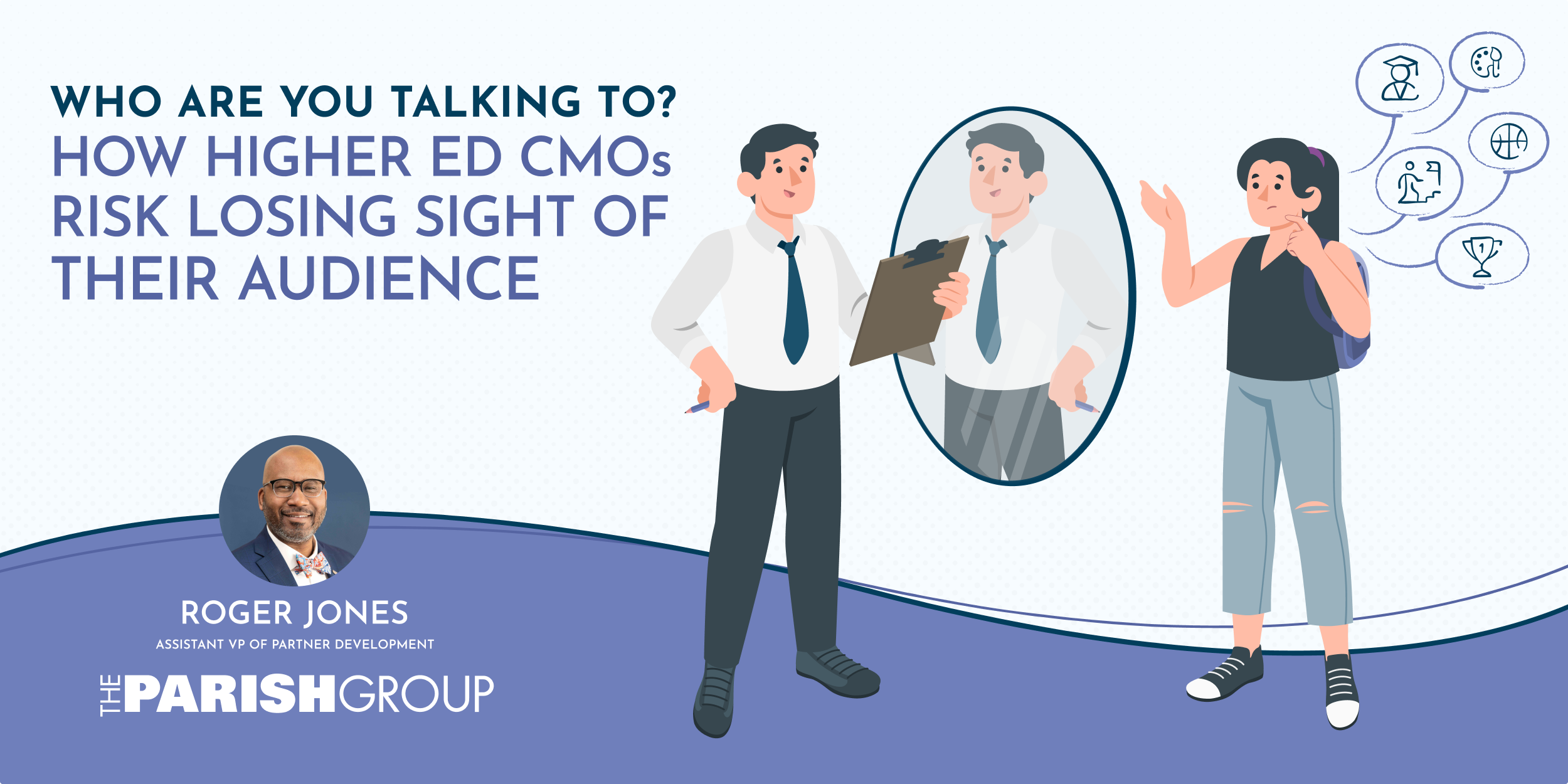
At the heart of the problem is a subtle but critical shift. Many higher ed CMOs are drifting (unintentionally) away from a deep understanding of their prospective students. Why is this? And what can we do about it?
Let’s break it down.
In a Landscape Full of Tools, Higher Ed Still Lacks Clarity
Today’s higher ed marketing ecosystem is more expansive than ever. Institutions operate across:
- Digital advertising
- Social media platforms
- CRM systems
- Email, SMS, and Phone Call Campaigns
- Print communications
At the same time, data and automation have transformed how teams segment audiences, track engagement, and optimize campaigns.
On paper, this should lead to more precise, effective marketing. But in practice, something else is happening.
With more tools, more data, and more internal pressure to deliver results, institutions can lose sight of the very thing that matters most: the student.
Where the Disconnect Begins
This disconnect doesn’t happen all at once. It builds gradually.
It starts when internal assumptions begin to replace external insight. When we shape messaging more by institutional pride than student need. When we design campaigns to “cover everyone” instead of speaking directly to someone.
Here are some common patterns we’re seeing emerge:
- Messaging that highlights institutional features rather than student outcomes
- Campaigns that feel broad and generic despite sophisticated segmentation tools
- Limited feedback loops from actual prospective students
- Heavy reliance on what has “always worked” rather than what resonates now
- Too many CTAs or no CTAs altogether
- Repetitive messaging that provides duplicative, not completely information
In a competitive enrollment environment, these gaps matter. So we must ask ourselves: what happens when we lose sight of our audience?
Engagement declines. Inquiry generation slows. That increased marketing spend becomes far less efficient. And ultimately, conversion and yield suffer.
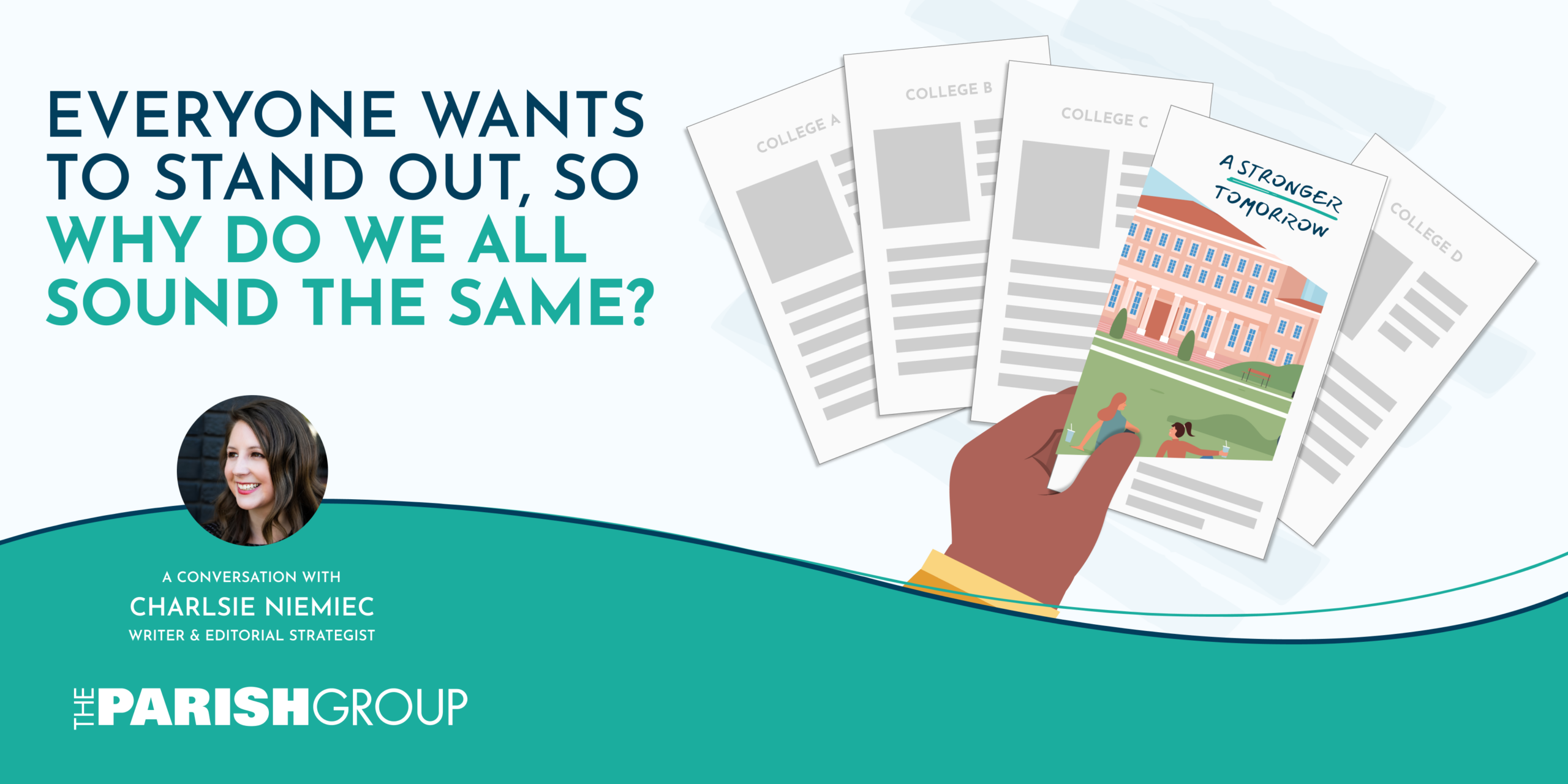
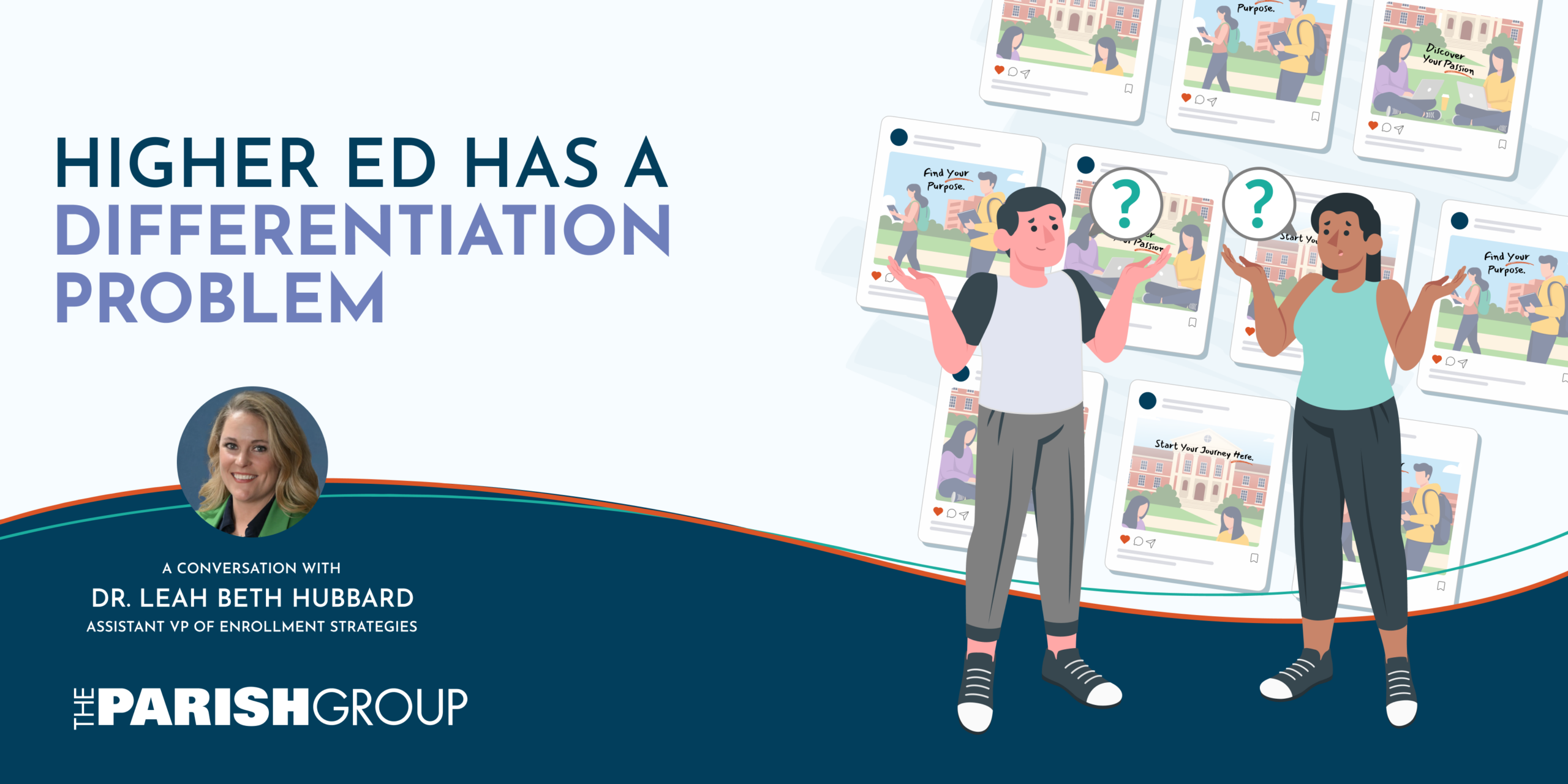
Worst of all, institutions begin to sound like one another. The very thing the industry preaches against and the students negatively report back to us.
When our messaging loses its identity, we lose our edge, clarity, and ability to distinguish ourselves.
It’s a more crowded market than ever. So that is a risk many institutions cannot afford.
Five Ways to Stay Audience-Centered
Re-centering your strategy doesn’t require a complete overhaul. It requires a shift in focus from internal perspective to external understanding.
1. Start with Behavior, Not Just Demographics
Demographics tell you who your students are. Behavior tells you why they act.
Understanding motivations, anxieties, decision triggers, and digital habits provides far more actionable insight than age, GPA, or geography alone.
Why are students hesitating? What are they comparing? What ultimately drives them to say yes?
Those answers should shape your strategy.
2. Align Messaging with Student Aspirations
Too often, we see higher ed marketing written in the language of the institution.
Students, however, listen for something else. They want to know:
- Where will this take me?
- Will I belong here?
- Is this worth it?
Shifting from “what we offer” to “what students gain” creates messaging that resonates. Outcomes (careers, community, confidence) matter more than internal terminology.
3. Segment with Purpose. Then Act on It.
Segmentation is only valuable if it leads to meaningful differences in execution.
If every audience receives the same messaging with minor variations, segmentation becomes superficial.
Even with CRM automation, each segment should feel like the message created was specifically for them. Because it was, wasn’t it?
4. Continuously Listen and Adapt
Audience understanding is not a one-time exercise. It requires ongoing listening:
- Surveys and engagement data
- Behavioral insights from digital platforms
- Feedback from admissions counselors who hear objections and concerns every day
Marketing should function as an evolving conversation, not a static campaign.
5. Integrate the Full Funnel Experience
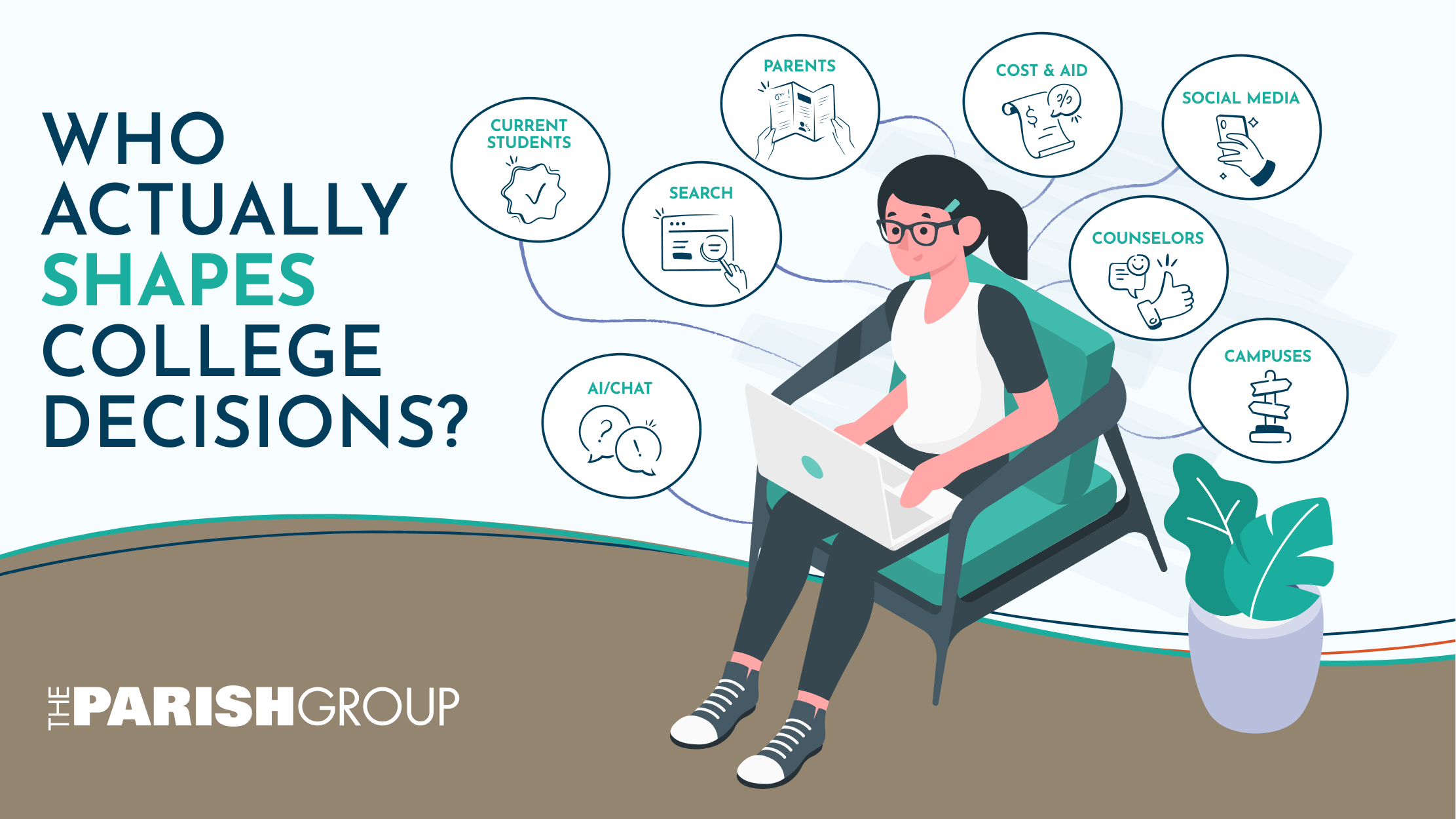
Students don’t experience your institution in silos. And your strategy shouldn’t either.
From the first digital touchpoint to enrollment, the experience should feel connected, consistent, and intentional.
That means alignment across marketing, admissions, financial aid, and campus experience teams.
When these areas operate independently (trust us) the student feels the disconnect.
Re-Centering the Strategy with The Parish Group
For CMOs, the path forward starts with a simple but powerful step: Revisit your audience. Talk to them. And listen.
- What do you truly know about your prospective students today?
- Where are your assumptions outdated?
- How well does your current messaging reflect student priorities?
Answering these questions requires collaboration. Not just within marketing teams, but across the institution.
Because understanding your audience isn’t just a marketing function. It’s an institutional responsibility. And effective marketing doesn’t begin with a campaign. Campaigns are a byproduct of understanding your audience.
In a time when higher education faces increasing pressure to perform, institutions that remain deeply connected to their students will have a clear advantage.
Sure, you may be communicating. But are you truly being heard?
If you feel like your communications strategy needs a refresh, The Parish Group is at your service. We can help you not only identify your ideal audience, but what it is they most want to hear. Let’s tell your strongest story together.
Learn more about our credible advising solutions.