The Campus Tour Starts Before Students Visit
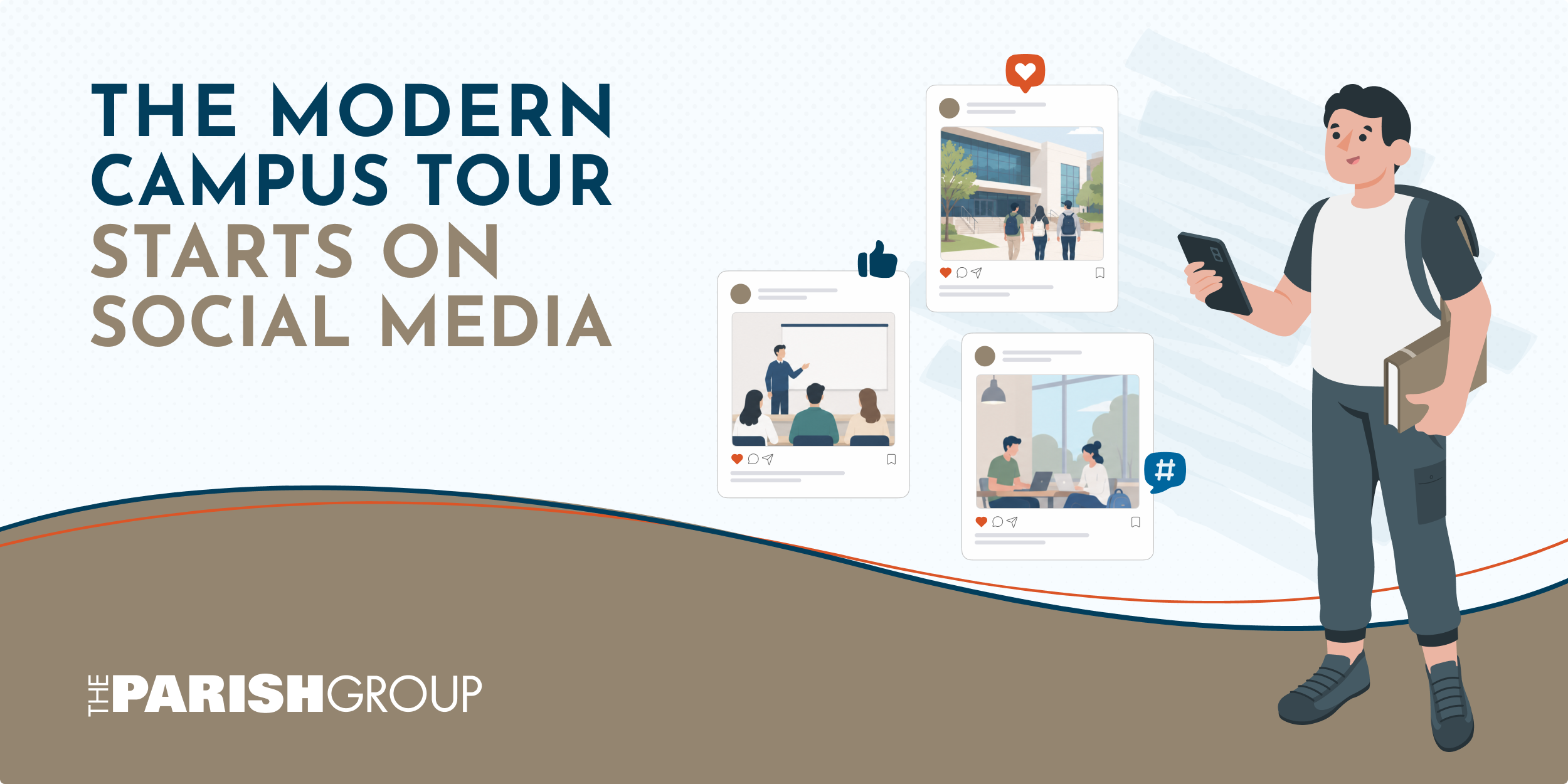
For many students, the first meaningful interaction with a college campus no longer occurs during an official tour.
It happens while scrolling.
Long before prospective students set foot on campus, they’ve likely already encountered the institution through Instagram posts, TikTok videos, student-created “day in the life” content, athletics highlights, residence hall move-in videos, dorm tours, student ambassador content, or campus event recaps. All of course, on social media.
According to Sprout Social’s Pulse Survey, social media has officially surpassed traditional search engines as the primary place Gen Z searches for information. Research analysis from YouGov similarly found that “social media is not just one of many channels for Gen Z, it is a central environment where discovery, influence and brand engagement happens.”
Which means visual storytelling and creative assets in higher education no longer function solely as marketing collateral. Increasingly, they operate as social proof, cultural evidence, and emotional signaling—they’re part of the digital environments students navigate every day.
Institutional Content No Longer Lives in Controlled Spaces
For years, higher-education institutions had significant control over the environments in which prospective students encountered their content—brochures, admissions packets, campus tours, or homepages—existing within relatively contained and intentional contexts.
Social media changed that dynamic entirely, but at this point, that’s not exactly new information. What is new is that current prospective students aren’t learning to navigate social media alongside those working in higher education. They’re digital natives who’ve never known a world without it.
Since prospective students are primarily researching on social media, institutional content is now competing with creator videos, influencer content, memes, peer-generated media, and algorithmically curated feeds built around rapid shifts in attention and a voracious appetite for more.
Prospective students now encounter institutional content continuously rather than periodically. Long before they formally engage with admissions, they may spend months or even years absorbing impressions through athletics content, student-created videos, residence hall posts, campus traditions, and peer-to-peer recommendations.
Visual Identity Now Shapes Institutional Perception
Much of that exposure is inherently visual. Short-form video, photography, creator content, and image-driven platforms increasingly shape how students interpret campus atmosphere, institutional personality, and emotional fit.
As a result, the quality and distinctiveness of an institution’s visual storytelling can significantly shape perception long before a student ever submits an inquiry form or schedules a campus visit.
Gen Alpha Will Expect Immersive Digital Ecosystems
These shifts are unlikely to slow down anytime soon.
Research shows that many Gen Alpha children begin engaging with tablets, video platforms, and social media years earlier than previous generations did, and that digital content increasingly serves as both entertainment and everyday infrastructure in their lives.
In many ways, they are the first generation being raised entirely within these algorithmically curated ecosystems. This unique experience will continue reshaping how institutions communicate online.
Institutions that still treat social media as a secondary communications channel may find themselves increasingly disconnected from how future students experience campus identity online.
While short-form video and more informal visual content continue to grow in influence, professionally produced campus photography still plays a critical role in helping institutions build recognizable, emotionally resonant, and adaptable visual identities across digital platforms.
We explore these shifts further in our companion piece, AI Is Raising the Stakes for Campus Photography, examining why emotionally specific and institutionally distinctive imagery may become even more valuable in the age of AI-generated content.
Frequently Asked Questions
As social media continues to reshape how students discover and evaluate colleges, it also changes the kinds of questions institutions need to answer publicly. We’ve included the FAQs below to translate the broader ideas in this piece into direct, searchable answers that reflect how students (and search engines) actually ask these questions today.
How important is social media in college decision-making?
Social media is increasingly central to the college discovery process. For many students, it is the first place they encounter institutions, forming early impressions through student content, campus visuals, and peer-generated media before ever engaging with admissions materials or visiting campus.
What is the role of a campus tour today?
Campus tours remain important, but their role has shifted. Rather than serving as the first introduction to a college, they now function as a moment of validation—confirming or challenging impressions students have already formed through months of digital exposure.
Why does visual content matter in higher education marketing?
Visual content shapes how students perceive campus culture, community, and belonging. In a social-first discovery environment, images and video often communicate institutional identity more quickly and emotionally than written information, making them a key factor in perception and fit.
How is Gen Z changing college discovery behavior?
Gen Z is redefining college search behavior by relying heavily on social platforms for discovery, comparison, and validation. Instead of starting with search engines or brochures, they increasingly begin with algorithm-driven feeds that surface student experiences, campus life, and peer perspectives.